
Draft SIL Practice Standards: What SIL Providers Should Be Reviewing Now
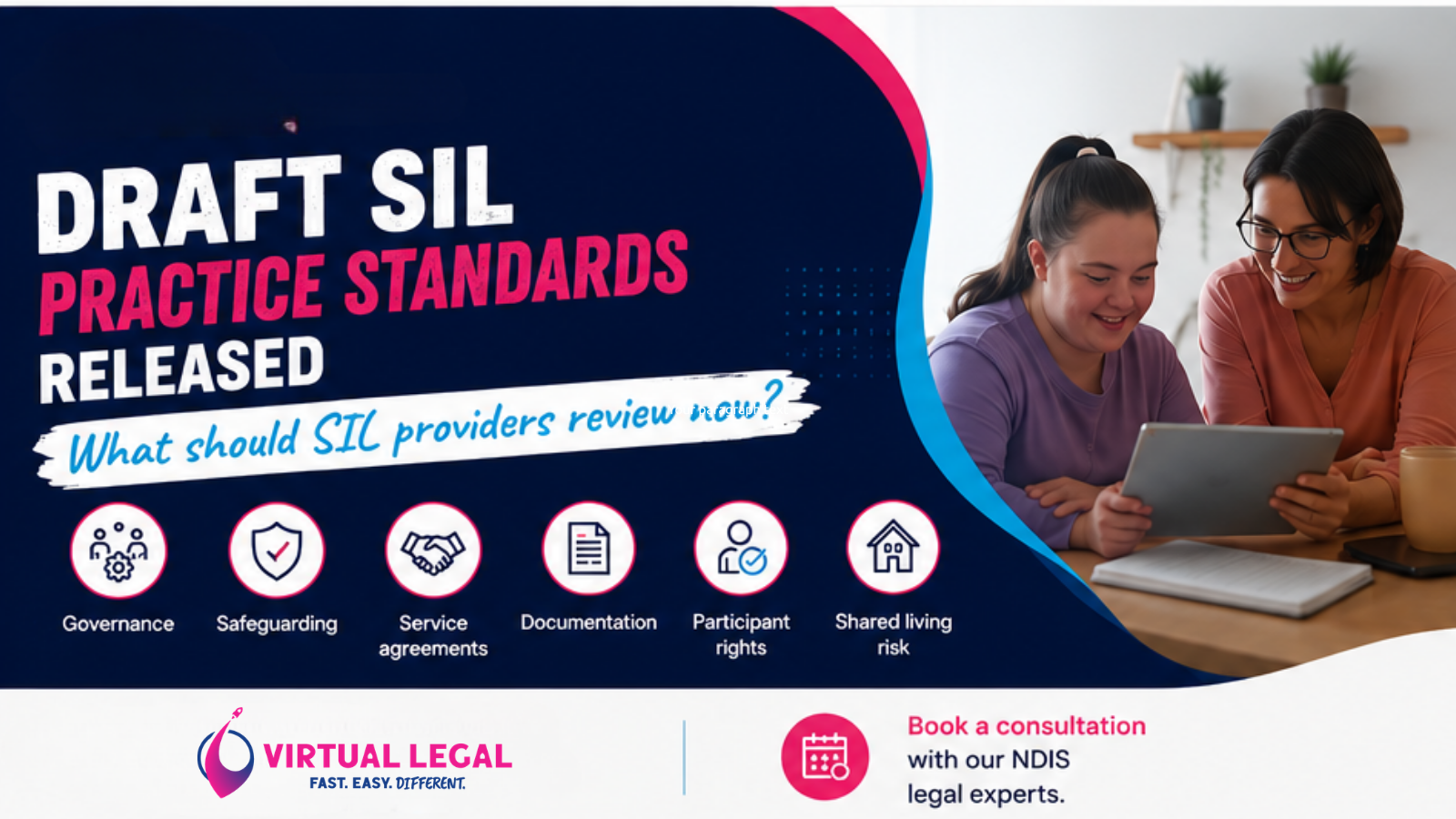
The NDIS Commission has released draft Supported Independent Living Practice Standards as part of the broader move toward mandatory registration for SIL providers from 1 July 2026.
The standards are still draft and may change before they are finalised. Providers should therefore avoid panic or rushed decision-making. However, the draft standards are still important. They give SIL providers an early indication of the areas likely to attract increased regulatory focus, particularly around governance, safeguarding, participant rights, documentation and quality of support in shared living environments.
Why this matters ?
Supported Independent Living is no longer being viewed only as a support service. It sits at the intersection of disability support, participant rights, duty of care, workforce supervision, shared living risks, housing arrangements, restrictive practices and regulatory compliance.
As SIL registration requirements progress, providers may increasingly need to demonstrate that their systems, policies, records and day-to-day practices align with the NDIS Practice Standards and broader obligations under the NDIS framework.
1 Governance and management systems
Providers should consider whether their governance framework is clear, current and operationally embedded. This includes decision-making authority, escalation pathways, risk oversight, internal reporting, policy ownership and board or management accountability.
2 Incident management and safeguarding
SIL environments can involve complex participant needs, shared living risks and vulnerable decision-making contexts. Providers should review whether incident management systems are practical, timely and supported by clear documentation.
3 Workforce capability and supervision
The draft standards highlight the importance of worker capability, supervision and practice quality. Providers should consider whether staff training, role expectations, handover processes and supervision arrangements are clearly documented and consistently applied.
4 Restrictive practices and participant rights
Providers should ensure they understand the difference between behaviour support, safeguarding, duty of care and unauthorised restrictive practices. This is an area where poor documentation or informal practices can create significant regulatory risk.
5 Service agreements and participant engagement
Service agreements should be clear, current and aligned with the supports actually being delivered. Providers should also consider whether participant engagement, supported decision-making and communication preferences are properly recorded.
6 Documentation and evidentiary records
One of the most important issues for SIL providers is evidence. If a complaint, reportable incident, audit or investigation occurs, providers may need to demonstrate what decisions were made, why they were made, who was involved and how participant rights and safety were considered.
7 Risk management in shared living environments
Shared living environments can create complex risks, including participant compatibility, tenancy issues, behavioural concerns, support arrangements, family involvement and escalation pathways. Providers should consider whether those risks are being reviewed, documented and managed consistently.
What providers should do now
Because the standards are draft, providers do not need to overhaul every document immediately. However, this is a sensible time to:
- Review current SIL service agreements
- Check governance and risk registers
- Review incident and safeguarding processes
- Assess restrictive practice documentation
- Confirm participant engagement processes
- Check staff training and supervision records
- Identify gaps before registration or audit pressure arises
Early preparation does not need to be alarmist. It is simply good governance.
How Virtual Legal can help
Virtual Legal assists NDIS and SIL providers with legal, governance and compliance readiness. We can help providers review service agreements, governance documents, participant risk processes, compliance frameworks and documentation systems ahead of the upcoming SIL registration changes.
If your organisation provides SIL supports and wants to understand what the draft standards may mean for your business, we can help you take a practical and measured approach.
Book a consultation with our NDIS legal team:
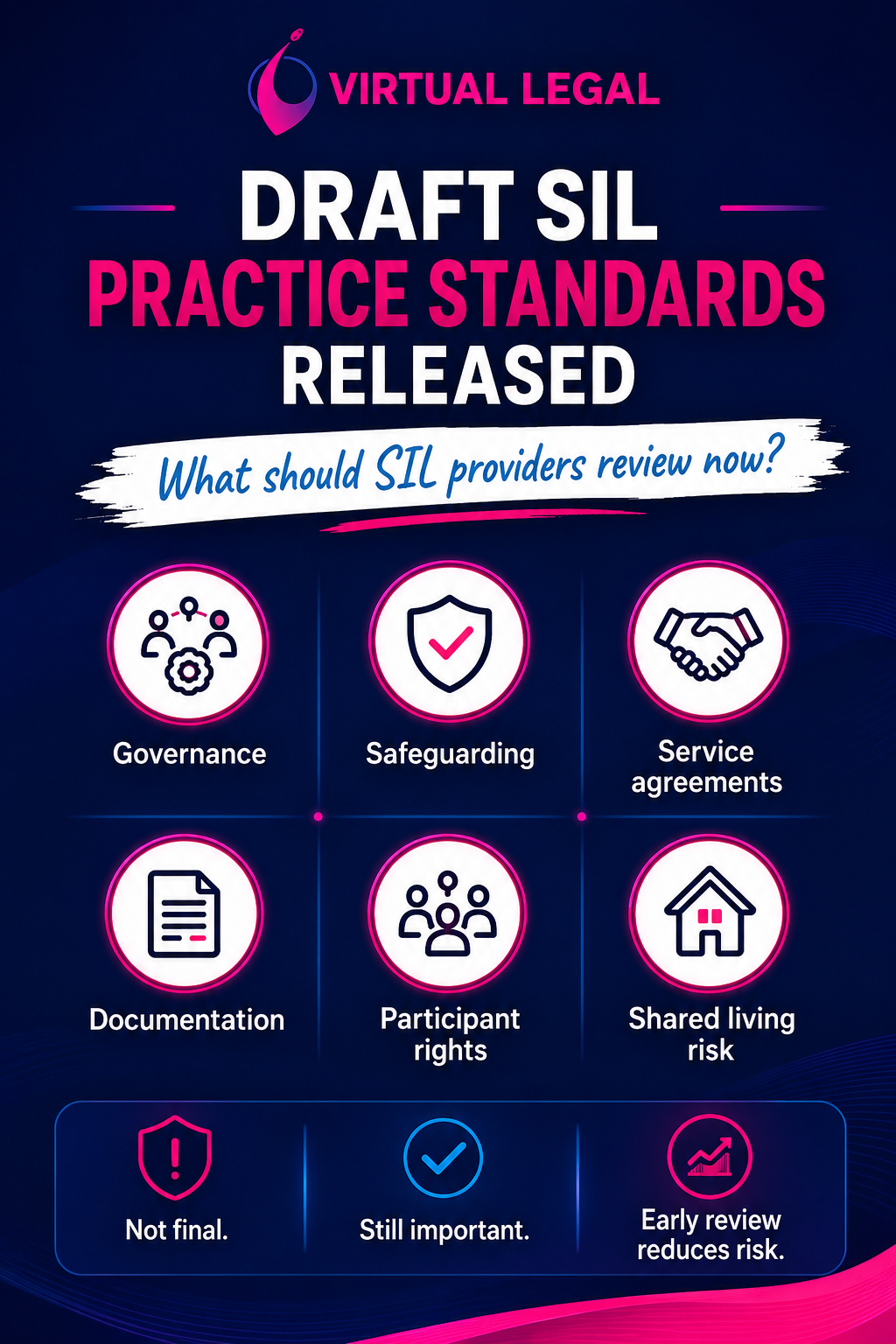
Draft SIL Practice Standards:
https://www.ndiscommission.gov.au
Looking at the broader NDIS reform landscape?
Read NDIS lawyer Niti Prakash's analysis of the proposed Securing the NDIS for Future Generations Bill 2026 and its potential impact on participant rights, funding decisions and administrative review processes.